A journey through the living messages of Christ
Revelation is not merely a book about the future — it is a letter addressed to real churches, in real places, with real people. This journey takes you in the footsteps of the 7 Churches of Asia Minor, where the apostle John sent the messages he received from Christ Himself. From the grand ruins of Ephesus to the solitary columns of Philadelphia, each stop is an invitation to self-examination, repentance, and a return to your first love.
You will walk not just a tourist route, but a spiritual one — through cities that witnessed the earliest centuries of Christianity, through amphitheaters where the words of the apostles once resounded, and through places where faith was tested by persecution, compromise, and indifference. With possible extensions to the island of Patmos (where John received his vision), Tarsus (the hometown of the apostle Paul), and Cappadocia (the land of the Cappadocians present at Pentecost), this journey offers a complete panorama of first-century Christianity.

Istanbul & Bosphorus
The gateway between two worlds
The journey begins at the intersection of continents — in Istanbul, the city that served as the capital of three empires. A cruise on the Bosphorus takes you through the strait that separates Asia from Europe, offering a panoramic view of the skyline that defined the history of Christendom: the dome of Hagia Sophia, the towers of Topkapi Palace, the Galata Tower, and the Byzantine churches that have withstood the centuries.
Here, where East and West meet, you understand why Asia Minor was the stage where the drama of the early church unfolded — a meeting place of cultures, ideas, and faiths.
“When you pass through the waters, I will be with you; and when you pass through the rivers, they will not sweep over you.”
— Isaiah 43:2

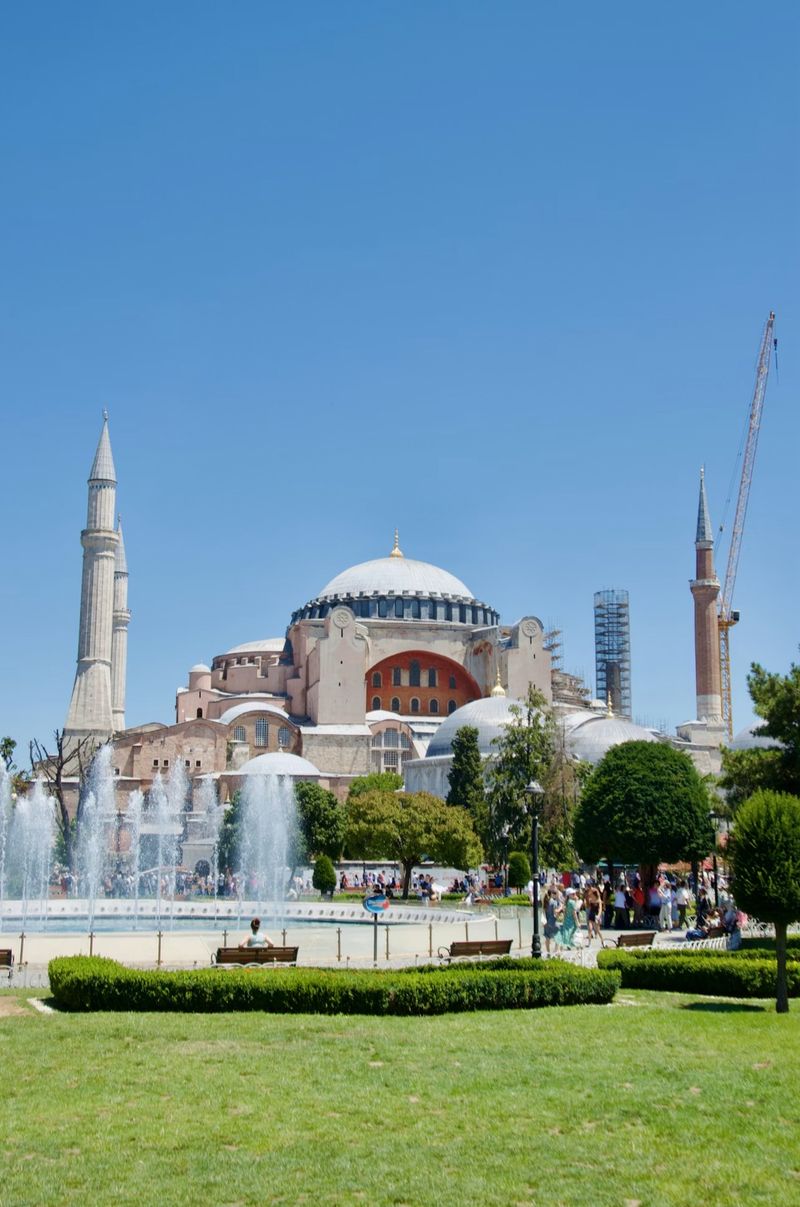
Hagia Sophia

Holy Wisdom — 1,500 years of history
Built in 537 AD by Emperor Justinian I, Hagia Sophia was the largest church in Christendom for nearly 1,000 years. Its massive dome, which seems to float above the nave, symbolizes heaven brought down to earth — an architectural declaration of God's presence among His people.
The name “Hagia Sophia” does not refer to a saint, but to Holy Wisdom — a title applied to Christ Himself. The building has passed from church to mosque (1453), to museum (1935), and back to mosque, but the Christian testimonies remain visible in its golden mosaics, Greek inscriptions, and architecture that speaks of the grandeur of Byzantine faith.
“Christ is the power of God and the wisdom of God.”
— 1 Corinthians 1:24
Ephesus

The first and greatest of the 7 Churches
Ephesus was the third largest city in the Roman Empire and the capital of the province of Asia. Here the apostle Paul served for three years, here he wrote the Epistle to the Ephesians, and here the apostle John lived in his final years. The Temple of Artemis — one of the 7 Wonders of the Ancient World — dominated the religious life of the city, and the conflict between the cult of Artemis and the message of the Gospel is dramatically described in Acts, chapter 19.
Today, the ruins of Ephesus are among the best preserved in the world: the Library of Celsus, the Great Marble Street, the 25,000-seat theater (where the crowd shouted “Great is Artemis!”), and the terrace houses that reveal the daily life of the first Christians.
“Yet I hold this against you: You have forsaken the love you had at first. Consider how far you have fallen! Repent and do the things you did at first.”
— Revelation 2:4-5
The message to Ephesus is a warning that transcends the centuries: a church can be orthodox in doctrine, active in service, and courageous against heresy — and yet have lost the essential. First love is not a feeling — it is a living relationship with Christ, spiritual fervor, and total devotion.
Don't miss the Basilica of Saint John — built on the traditional site of the apostle's burial — and the House of the Virgin Mary, a pilgrimage site on Mount Koressos. Faith without love becomes legalism. Love without truth becomes sentimentalism.
Smyrna (Izmir)

The church of suffering — without reproach
Smyrna is the only one of the 7 churches that still exists — today, the city of Izmir, Turkey's third largest. It is also one of only two churches (alongside Philadelphia) to which Christ brings no reproach.
Smyrna's deep connection to Christian suffering is personified by Saint Polycarp, bishop of Smyrna and disciple of the apostle John, martyred by burning at the stake around 155 AD. When the Roman authorities demanded he recant, Polycarp spoke the famous words: “For 86 years I have served Christ and He has done me no wrong. How can I blaspheme my King, who saved me?”
“I know your afflictions and your poverty — yet you are rich... Be faithful, even to the point of death, and I will give you life as your victor's crown.”
— Revelation 2:9-10
The message to Smyrna is a comfort for all who suffer for their faith: earthly poverty can coexist with heavenly riches, and temporary suffering leads to an eternal crown.
Pergamum (Bergama)

Where Satan's throne is
Ancient Pergamum was a center of Hellenistic culture, renowned for its library rivaling that of Alexandria, for the monumental Altar of Zeus (identified by many scholars with the “throne of Satan” in Revelation), and for the Temple of Asclepius — the god of healing, whose symbol was a serpent.
The sites we visit include: the Red Basilica (a former imposing basilica), the Altar of Zeus on the Acropolis, the Temple of Asclepius with its sacred tunnel, the Library of Pergamum, and the spectacular theater built on the hillside — the steepest theater in the ancient world.
“I know where you live — where Satan has his throne. Yet you remain true to My name. You did not renounce your faith in Me.”
— Revelation 2:13
Christ praises the church in Pergamum for maintaining His name in a profoundly hostile environment, but criticizes it for tolerating the teaching of Balaam — moral and spiritual compromise with the surrounding pagan culture. The promise: “hidden manna” and a “white stone” with a new name — symbols of divine intimacy and a new identity in Christ.
Thyatira (Akhisar)
The city of purple and compromise
Thyatira was a prosperous commercial center, famous in antiquity for the production of purple dye — the royal dye extracted from plants and crustaceans. Its connection to the New Testament is direct and personal: Lydia, a dealer in purple cloth from Thyatira, met by Paul in Philippi, became the first European convert to Christianity (Acts 16:14). Her baptism marks the beginning of the Gospel's expansion on the European continent.
The city was organized into powerful trade guilds, and membership in these guilds required participation in pagan banquets and associated rituals — a constant pressure toward compromise for Christians in Thyatira.
Christ's message: praise for love, faith, service, and perseverance — but sharp criticism for tolerating “Jezebel,” a symbol of teaching that combined faith with idolatry and immorality. The promise: authority over the nations and the “morning star” — Christ Himself.
A journey that transforms
The 7 Churches are not just archaeological sites — they are mirrors. Each message of Christ is addressed not only to a first-century community, but to every believer in every age. This journey invites you to respond personally to Christ's message — not in a conference hall, but right on the ruins of the cities to which it was addressed.
Sardis
Reputation without reality
The ancient capital of Lydia, Sardis was famous for the fabulous wealth of King Croesus and for the invention of gold and silver coins — an innovation that transformed world commerce. The city was considered impregnable, situated on a steep cliff — and yet was conquered twice by surprise, by the Persians and the Greeks, through places that no one guarded.
This history gives a profound resonance to Christ's message, which warns: “Wake up! If you do not wake up, I will come like a thief, and you will not know at what hour I will come to you.” The Temple of Artemis at Sardis, the imposing synagogue, and the Roman gymnasium are testimonies of a city that had everything — except authentic spiritual life.
“You have a reputation of being alive, but you are dead. Wake up! Strengthen what remains and is about to die.”
— Revelation 3:1-2
The message to Sardis is a call to awakening: a spiritual reputation does not guarantee spiritual reality. The call to vigilance and repentance is just as urgent today as it was two millennia ago.
“Wake up, sleeper, rise from the dead, and Christ will shine on you.”
— Ephesians 5:14
Philadelphia (Alasehir)
The open door that no one can shut
Founded by the kings of Pergamum to spread Greek culture eastward, Philadelphia — whose name means “brotherly love” — was a cultural outpost at the edge of the empire. Located in an active seismic zone, the city suffered devastating earthquakes, and its inhabitants lived in a permanent state of uncertainty, ready at any moment to flee to the surrounding plains.
Like Smyrna, Philadelphia receives no reproach from Christ. Though small and with little power, this church kept its faithfulness. Christ promises it protection in the hour of trial and a permanent place in the temple of God — a promise all the more significant for a community accustomed to instability and the fear of losing everything.
“See, I have placed before you an open door that no one can shut. I know that you have little strength, yet you have kept My word and have not denied My name.”
— Revelation 3:8
Laodicea
Neither cold nor hot
Laodicea was a prosperous city, famous for three industries: its bank (a financial center of Asia Minor), its textile industry (especially black wool), and its school of medicine specializing in ophthalmic treatments. This material prosperity gave the church a false sense of self-sufficiency.
Christ's message makes direct references to these three local industries: “I counsel you to buy from Me gold refined in the fire (not from your bank), white clothes (not your black wool), and salve to put on your eyes (not from your school of medicine).” The irony is profound: the city that had everything was, in reality, “wretched, pitiful, poor, blind, and naked.”
“You say, 'I am rich; I have acquired wealth and do not need a thing.' But you do not realize that you are wretched, pitiful, poor, blind and naked... Here I am! I stand at the door and knock. If anyone hears My voice and opens the door, I will come in.”
— Revelation 3:17, 20
The site is particularly impressive: the ruins of a stadium, two theaters, a basilica, and a system of aqueducts that brought lukewarm water from nearby thermal springs — perfectly explaining the metaphor of water that is “neither cold nor hot.” Laodicea is located just a few kilometers from Hierapolis (with its hot springs) and Colossae — the three cities forming a fascinating biblical triangle.
Jesus decodes the three purchases: gold refined in fire is authentic faith, white clothes are righteousness, and the eye salve is spiritual clarity. The Lord Jesus is not in the midst of the church — but outside it, knocking at the door. Laodicea is the final appeal in Revelation to the global Church: Christ's call to awakening, repentance, and living fellowship.
Pamukkale — Cotton Castle
Pamukkale, the “Cotton Castle,” is one of Turkey's natural wonders — spectacular white travertine terraces formed by thermal waters rich in calcium, at a temperature of 35°C. A UNESCO site, Pamukkale impresses with its surreal beauty and the therapeutic properties of its waters.
Optional: hot air balloon flight at sunrise, at 500-1000m altitude — an unforgettable experience above the white terraces and ancient ruins.

Hierapolis — The Holy City
Alongside Pamukkale lies Hierapolis, the “Holy City” — an important Christian center from the first century. Hierapolis was part of the biblical triangle alongside Colossae and Laodicea, being mentioned directly in the New Testament.
“I vouch for him that he is working hard for you and for those at Laodicea and Hierapolis.”
— Colossians 4:13 — The Apostle Paul about Epaphras
Epaphras, sent by Paul, founded the Christian community in Hierapolis. Here also lies the martyrium of the Apostle Philip, discovered by archaeologists — the site where tradition says Philip was martyred. The impressive 15,000-seat Roman theater, the Necropolis (one of the largest in antiquity), and the Gate of Domitian complete the picture of an extraordinary civilization.
The Island of Patmos — The Place of Revelation

Patmos is the sacred island where the Apostle John was exiled in 95 AD, under Emperor Domitian. Here, in a cave on the mountainside, John received the vision that would become the Book of Revelation — the last book of the Bible.
“I, John, your brother and companion in the suffering and kingdom and patient endurance that are ours in Jesus, was on the island of Patmos because of the word of God and the testimony of Jesus.”
— Revelation 1:9
The Cave of the Apocalypse (the Grotto) — the exact place where tradition says John received the Revelation — is today a venerated pilgrimage site. The Monastery of Saint John the Theologian, built in 1088, dominates the island from the hilltop, with fortress walls and an impressive collection of manuscripts. The old town of Chora, with its white houses cascading down the hill, completes the picture. The entire complex is a UNESCO site.
Why this journey is unique
7 messages, one voice
Each church received a unique message from Christ — praise, criticism, warning, or comfort. Together, the 7 messages form a complete portrait of the relationship between Christ and His Church.
2,000 years of living history
From Hagia Sophia to the ruins of Ephesus, from the Altar of Zeus to the Temple of Artemis — each archaeological site is a window into the world in which Christianity was born and spread.
Extensions: Patmos, Tarsus, Cappadocia
Possible extension to the island of Patmos (the place of John's exile and the vision of Revelation), Tarsus (the hometown of the apostle Paul), and Cappadocia (the rock churches and the land of the Cappadocians from Pentecost).
In-depth biblical guidance
Each site is explored not only from a historical and archaeological perspective, but above all from a biblical one — with on-site Bible study, moments of reflection, and personal application.